

Weight-loss injections for lipoedema – useful or not?
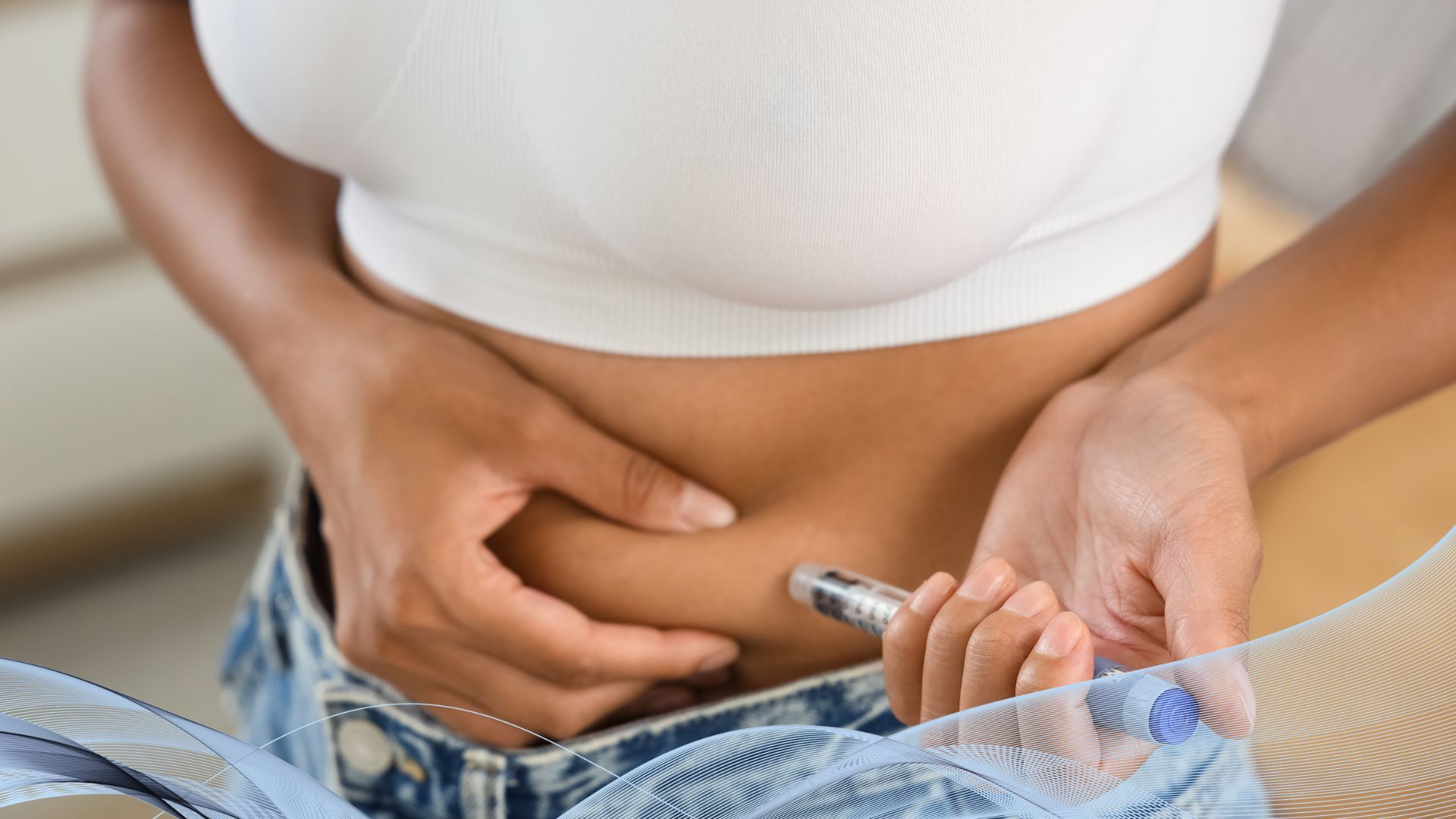
So-called weight-loss injections promise significant weight reduction and have fundamentally changed the treatment of overweight and obesity. But what about women with lipoedema? Can a weight-loss injection also reduce abnormally changed fatty tissue? And could it be an alternative to liposuction?
Many women with lipoedema know the frustration: despite a mindful diet, regular exercise and weight loss, their legs or arms remain noticeably larger in proportion to their upper body.
The question of whether medications such as Ozempic or Mounjaro can also help with lipedema is therefore particularly relevant.
The short answer: A weight-loss injection may be appropriate for lipedema when a person is also overweight or has obesity. However, based on current scientific evidence, it is not a targeted treatment for lipedema.
What are weight-loss injections and how do they work?
“Weight-loss injections” is a colloquial term for various prescription medications used to support weight loss.
Some of the best-known active ingredients include:
- Semaglutide, for example, as found in Wegovy
- Tirzepatide, found in Mounjaro
- Liraglutide, found in Saxenda
Ozempic also contains semaglutide, but it is approved to treat type 2 diabetes, not as a standalone weight-loss medication.
What role do GLP-1 and GIP play?
These active ingredients affect the hormonal regulation of hunger, fullness and metabolism.
Semaglutide and liraglutide activate receptors for the gut hormone GLP-1 (glucagon-like peptide-1). Among other things, this hormone helps regulate appetite and insulin secretion.
Tirzepatide also acts on the receptor for GIP (glucose-dependent insulinotropic polypeptide).
As a result, the medications can:
- reduce feelings of hunger,
- increase feelings of fullness,
- reduce food intake,
- affect blood sugar regulation.
Large clinical trials have shown that certain active ingredients can lead to substantial weight loss. The amount of weight lost depends on factors including the medication, dosage, duration of treatment and individual circumstances.
Why is losing weight often so difficult with lipoedema?
Lipoedema is a chronic condition that affects almost exclusively women and is characterised by a disproportionate increase in subcutaneous fatty tissue.
The legs and hips are most commonly affected, and sometimes the arms as well.
Many patients report losing a significant amount of weight from their upper body, while their affected limbs remain relatively large.
There are several possible explanations for this. Fat distribution is influenced, among other things, by genetic and hormonal factors. Lipedema also involves disease-specific changes in the tissue.
However, it is important to note that weight loss can also change the fatty tissue in areas of the body affected by lipoedema. It is not completely resistant to a negative energy balance.
However, weight loss does not necessarily normalize typical body proportions or make lipedema symptoms disappear completely.
Do weight-loss injections help with lipoedema?
This question needs a nuanced answer.
Can weight-loss injections reduce lipoedema fat?
Weight-loss injections lead to general weight loss. However, they do not target the abnormal fatty tissue associated with lipoedema.
So far, there is not enough clinical evidence to show that GLP-1-based medications reliably treat lipoedema itself or reverse its disease-specific changes.
This does not mean that leg circumference cannot change during treatment. Overall weight loss can also reduce fatty tissue in the affected limbs.
Whether this improves typical lipoedema symptoms varies from person to person and has not yet been adequately studied.
When might weight-loss injections still be appropriate?
Many women with lipoedema are also overweight or have obesity.
In these cases, medically supervised weight loss may offer health benefits.
Lower body weight can, for example:
- reduce strain on the joints,
- improve mobility,
- make physical activity easier,
- reduce metabolic risks,
- improve overall well-being.
Lipoedema symptoms may also improve with weight loss. However, this effect cannot be expected in every patient.
Weight-loss injections can therefore be a complementary measure for treating overweight or obesity—but they are not a standalone, specific treatment for lipedema.
Weight-loss injections or liposuction—what’s the difference?
Weight-loss injections and liposuction take different approaches to treatment.
While weight-loss injections affect food intake and therefore body weight through hormonal pathways, liposuction surgically removes fatty tissue.
Can weight-loss injections replace liposuction?
Weight-loss injections are not an equivalent substitute for liposuction.
The two treatments have different mechanisms of action and different uses.
If a person has obesity requiring treatment in addition to lipedema, medication-assisted weight loss may, where appropriate, form part of a broader treatment plan.
Whether and when surgery is appropriate depends, among other things, on symptoms, previous conservative treatments and individual health circumstances.
What are the side effects of weight-loss injections?
Although medications such as Wegovy and Mounjaro are effective for many people, they are prescription medicines with potential side effects.
Gastrointestinal symptoms are particularly common.
These include nausea, vomiting, diarrhea, constipation and abdominal pain.
Other risks and contraindications should also be considered, such as diseases of the pancreas or gallbladder. The patient’s medical history and the relevant medication’s prescribing information are key.
What happens after stopping treatment?
Another important factor is long-term weight management.
Studies show that people often regain some of the weight they lost after stopping weight-loss medication.
Obesity treatment should therefore be planned for the long term. A balanced diet, adequate protein intake and regular physical activity remain important parts of the treatment plan.
Weight-loss injections before lipedema surgery—is it worth considering?
For patients with lipoedema who also have obesity, it may be helpful to lose weight before planned surgery.
Improving your overall health may be relevant when planning surgery.
However, it should be borne in mind that rapid weight loss can also lead to muscle loss and inadequate nutrient intake.
Especially before surgery, it is essential to get enough protein and other important nutrients and to be in good general health.
It is also important to note that GLP-1-based medications can delay stomach emptying. The anaesthesia team must therefore be informed about their use before surgery.
Whether treatment needs to be continued or adjusted temporarily depends on the individual risk assessment and the planned type of anaesthesia.
Bottom line: Are weight-loss injections useful for lipoedema?
Weight-loss injections such as Wegovy or Mounjaro can be very effective in treating overweight and obesity.
Such treatment may therefore be helpful for women with lipedema who also have obesity.
However, an important distinction needs to be made: losing weight is not the same as treating lipoedema directly. Weight-loss injections are not a substitute for a healthy, balanced diet either.
So far, there is insufficient scientific evidence that weight-loss injections reliably treat the disease itself.
An individually tailored lipedema treatment plan should therefore continue to take symptoms, physical examination findings, conservative measures and, where appropriate, surgical treatment options into account.
At LipoZentrum Dr. Heck, the focus is on assessing each patient’s condition individually. The aim is to find a medically appropriate treatment plan together with every patient.